
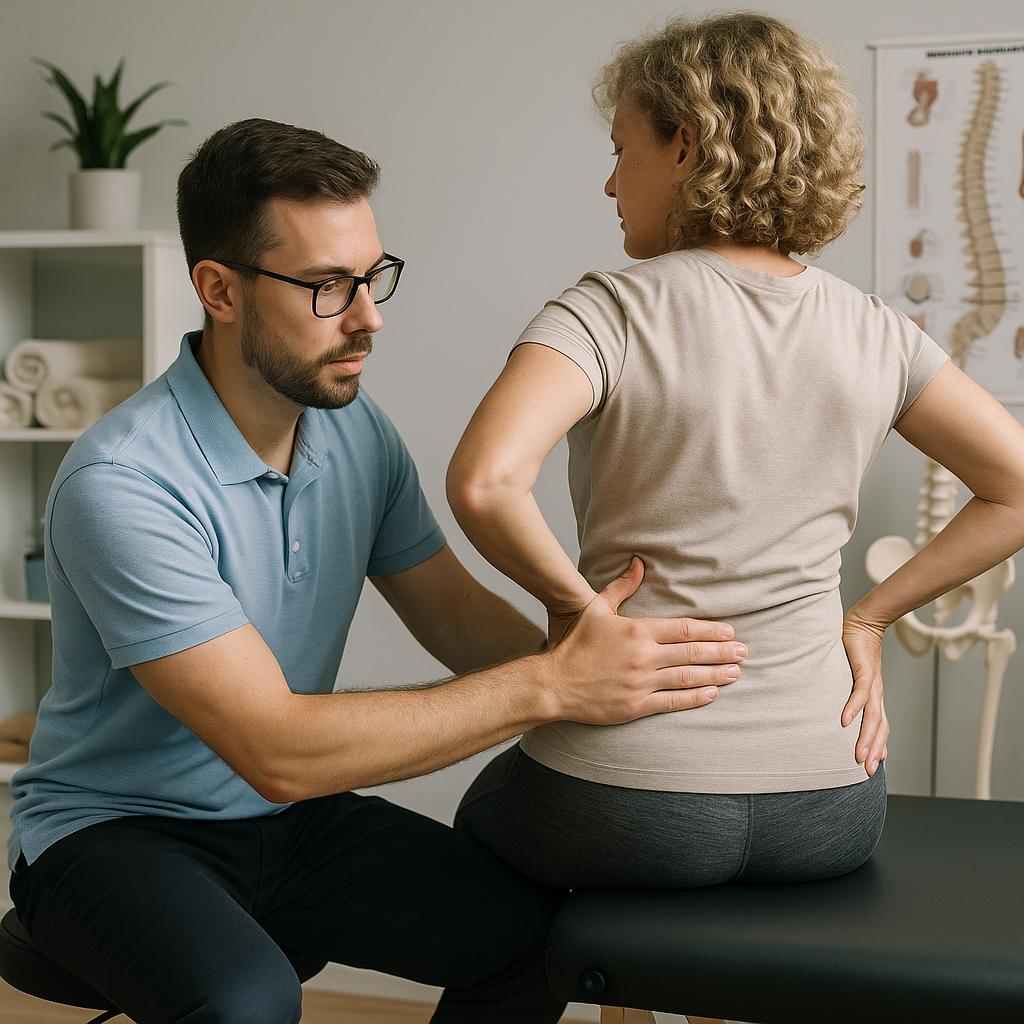
Explore how understanding functional loss through lumbar classification systems can transform conservative management strategies and help you regain mobility, reduce pain, and return to the activities you love.
Demystifying Functional Loss: What It Means for Low-Back Pain Recovery
Eileen Vollowitz’s article challenges traditional, generic medical advice for back pain—such as "sleep on a firm mattress" or "sit with a lumbar support"—arguing that such directives can actually exacerbate symptoms for some patients. Instead, she proposes a classification system based on "functional loss characteristics," suggesting that specific clusters of symptoms should guide furniture prescription rather than anatomical diagnoses. The success of conservative management depends on matching furniture design characteristics—such as seat height, tilt, and contour—to the individual’s unique pattern of sensitivity.
The article categorizes these functional losses into four distinct patterns: Position Sensitivity, Weight-bearing Sensitivity, Constrained-posture Sensitivity, and Pressure Sensitivity. Position-sensitive patients are aggravated by specific postures (flexion or extension biases) and typically find relief in a "mid-range" lumbar position, often achieved with a 135-degree thigh-torso angle. Conversely, weight-bearing sensitive patients are aggravated by gravity and vertical loading in any position; they require unloading through reclining, armrests, or traction to find relief.
The remaining categories address movement and contact stress. Constrained-posture sensitive patients cannot tolerate static positioning and require frequent movement ("the squirm factor") to avoid pain, making them poor candidates for rigid ergonomic setups. Pressure-sensitive patients experience pain from direct contact with surfaces, such as the ischial tuberosities or spinous processes, and require furniture that dissipates force through contouring or softer materials. Vollowitz emphasizes that most patients present with a combination of these sensitivities, which may evolve as the pathology heals.
To address these sensitivities, the article provides a detailed analysis of "furniture prescription" covering seating and sleep surfaces. For example, for "forward-sitting" tasks (like writing or dentistry), Vollowitz recommends a saddle-sitting posture or a forward-tilted seat to maintain the hip angle and recruit postural muscles, rather than a traditional 90-degree chair which forces lumbar flexion. For sleep, she details how body weight and "hip development" (the difference between waist and hip circumference) dictate the need for mattress contouring to maintain alignment, noting that standard firm mattresses often fail patients under 140 lbs or those with significant curves.
Clinical Caveat and Application for Therapists
It is critical to note that these lumbar classification systems do not point to specific mechanical, neuromuscular, or motor control problems. In fact, Vollowitz notes that active range of motion may be full and symmetrical even when these sensitivities are present, meaning standard mechanical evaluations might miss these functional deficits. Therefore, these classifications are not intended to diagnose the underlying pathology but serve as a crucial management strategy to help patients in the healing phases avoid the specific environmental stressors that are bothering them the most.
For physical therapists, this framework offers a vital tool for upgrading the "ergonomic advice" portion of a plan of care from generic handouts to precision intervention. Therapists can use the patient's subjective history—specifically how they sit, sleep, and seek relief—to categorize them into one of the four sensitivities. Instead of simply checking active range of motion, the therapist observes "passive positioning behaviors" (e.g., does the patient lean on armrests? Do they cross their legs to lock the pelvis?). This allows the therapist to prescribe specific equipment that directly addresses their functional loss.
Furthermore, this approach correlates nicely with the Institute of Physical Art (IPA) CoreFirst Strategies. Vollowitz notes that "active-sitting" postures (like saddle sitting) recruit large postural muscles of the trunk, distinguishing them from "passive-sitting" where muscles are dormant. This aligns with the IPA model, which prioritizes efficient alignment to ensure the core muscles fire reflexively to protect the spine. By adopting Vollowitz's recommendation for open thigh-torso angles (135 degrees), therapists can facilitate the "Core First" posture, ensuring that the furniture supports the patient's ability to maintain an efficient, non-collapsing column of support.
Ultimately, utilizing this classification system allows therapists to treat furniture prescription with the same rigor as orthotics or gait training. It shifts the focus from managing the patient only during the clinic hour to managing the environmental stresses placed on the spine during the other 23 hours of the day. By identifying whether a patient needs load dissipation (weight-bearing sensitivity) or movement facilitation (constrained-posture sensitivity), the therapist prevents the patient’s home and work environment from sabotaging the manual therapy and exercise interventions performed in the clinic.