
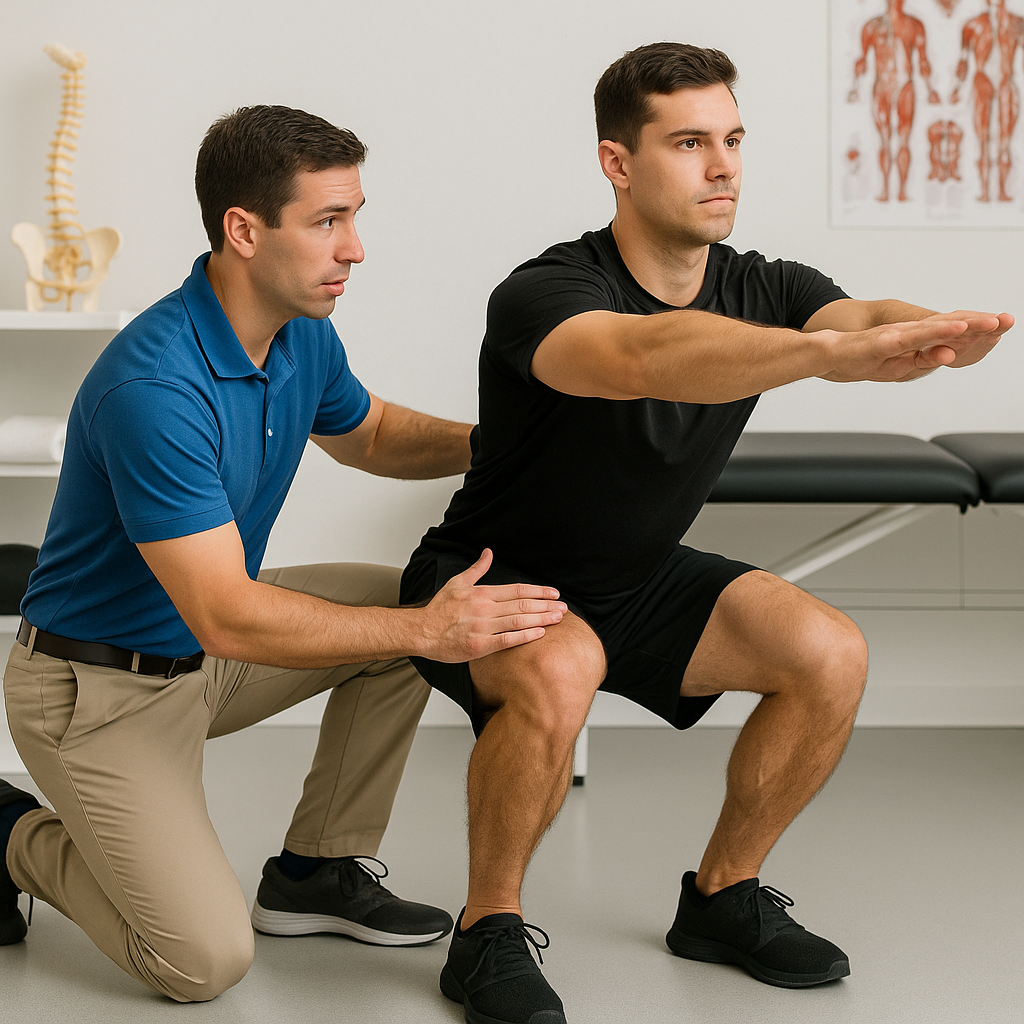
Unlock the true impact of your squat technique—discover if your form is building resilience or setting you up for injury.
The Science Behind the Squat: Foundation of Functional Movement
Imagine if you only visited the dentist once your teeth were already falling out.
Most people treat their physical health the same way—waiting for a “pop,” a sharp pain, or an injury before seeking real help.
At Revolutions in Fitness, our mission is different. We help you stay active, pain-free, and resilient before injuries occur. Whether you’re carving turns during ski season, diving for a shot in pickleball, or sprinting down a soccer field, our goal is simple: keep you in the game at any age.
That is your Dream Outcome.
What the Research Says: Your Squat Predicts Your Injury Risk
Recent research published in the Journal of Bodywork & Movement Therapies confirms something we’ve practiced for years: the way you squat is a window into your future injury risk.
The squat isn’t just a gym exercise—it’s a fundamental human movement that shows up in almost everything you do. It requires coordination across the entire trunk and lower body and activates nearly 200 muscles.
When one link in that chain is weak, your body quietly begins withdrawing from your “health account.” Eventually, the withdrawals add up—and injury becomes inevitable.
Why the Single Leg Squat Matters
A systematic review found that isolated squat tasks—especially the Single Leg Squat (SLS)—are highly effective tools for identifying hidden movement deficits.
Researchers consistently observed that:
-
Limited ankle mobility
-
A knee that collapses inward (valgus)
-
Poor trunk control
are strong predictors of future lower-extremity injuries.
These small deficits may not feel like a problem today, but during high-demand sports or activities, they can turn into sprains, strains, and weeks or months on the sidelines.
Spotting these issues early is one of the most powerful strategies for long-term injury prevention.
Your Biomechanical Audit: Research in Action
At Revolutions in Fitness, we take this science and apply it directly to your care.
We don’t just watch you move. We conduct a biomechanical audit using standardized, research-validated criteria, assessing:
-
Knee-to-toe alignment
-
Pelvic and trunk stability
-
Quality and symmetry of movement
-
Load tolerance and control
This is not guesswork—it is a diagnostic approach that helps you:
-
Understand your movement patterns
-
Identify your personal weak links
-
Train and play with confidence
Whether you’re on a bike, a trail, the court, or the snow, this gives you the peace of mind to push your limits safely.
The 3–5 Minute Daily Advantage
Your time is valuable, and we respect that. That’s why we do not believe in one-size-fits-all corrective programs.
Following your assessment, we build a custom 3–5 minute daily routine targeting only your weak links.
No wasted time. No fluff. No generic lists.
This ultra-efficient approach ensures you:
-
Build resilience quickly
-
Stay pain-free with minimal time investment
-
Avoid the long rehabilitation required after an injury
It is the highest-leverage health habit you can build.
Ready to See Where You Stand?
Don’t wait for the “toothache” moment in your knees, hips, or back.
If you want to move well, feel strong, and stay active long-term, a squat-based biomechanical audit is one of the most powerful tools we can offer.
We are currently offering a Free 30-Minute Evaluation.
During your session, you’ll receive:
-
A research-backed movement assessment
-
A hands-on evaluation of joints, muscles, and mobility
-
A personalized 3–5 minute daily plan to address your specific needs
Let’s keep your “health account” in the green—so you can stay active at any age.