
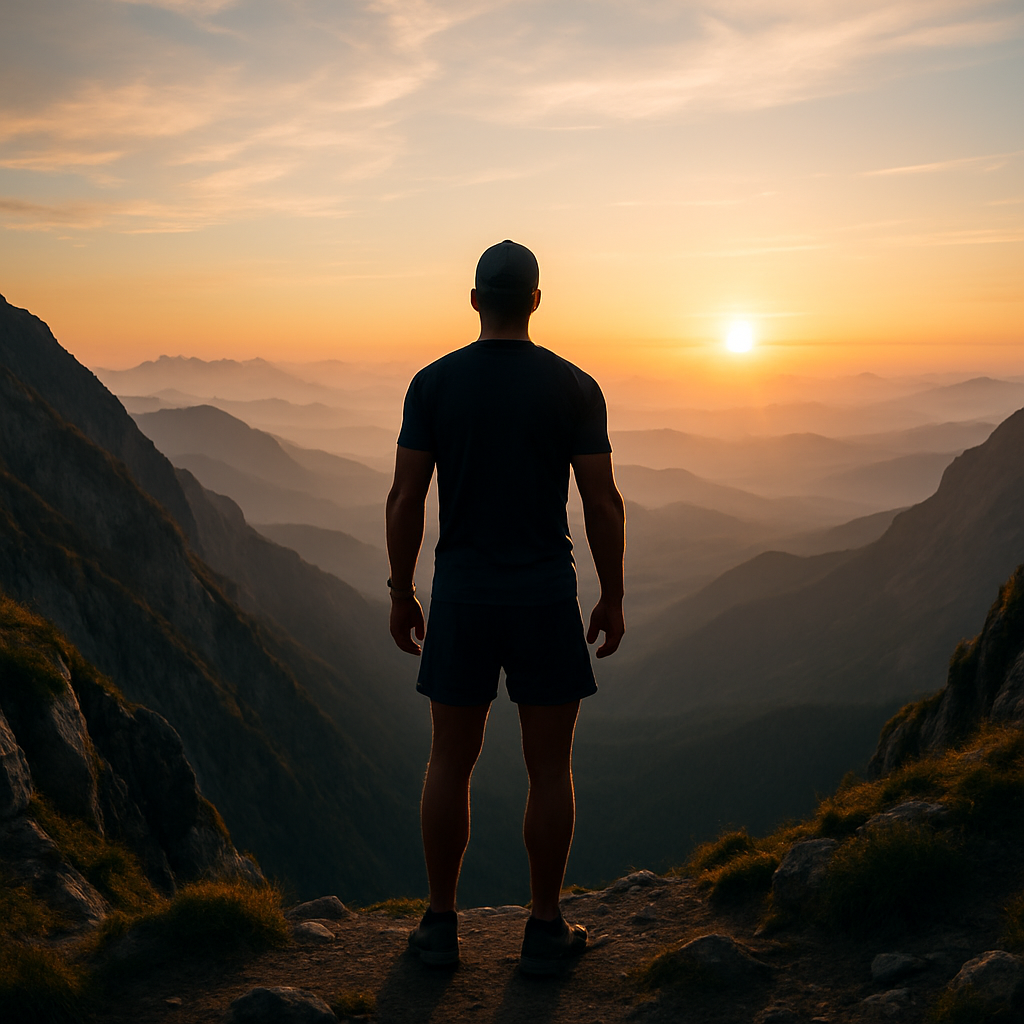
Experiencing awe—that profound feeling of wonder in the presence of something vast—may be the missing ingredient in your recovery protocol, backed by emerging research showing its powerful effects on inflammation, stress reduction, and tissue healing.
What Awe Does to Your Body at the Cellular Level
The Most Underrated Recovery Tool: Awe
In a recent episode of the Huberman Lab podcast, Dr. Dacher Keltner, a renowned psychologist from UC Berkeley, discussed a concept that might be one of the most underrated tools in your recovery toolkit: Awe.
For our Silicon Valley community—where the “grind” is often a badge of honor—stress isn’t just a feeling; it’s a physiological state of high sympathetic arousal. Keltner’s research suggests that intentionally seeking out moments of wonder can act as a powerful reset button for a nervous system stuck in fight-or-flight mode. It is a form of therapy that requires no equipment and only about 15 minutes of your time.
The cornerstone of this practice is the “awe walk.”
In a 2020 study published in the journal Emotion, Keltner and his team found that participants who took weekly 15-minute awe walks reported significant increases in compassion and gratitude, along with a decrease in daily distress. One of the most interesting findings was how participants’ “selfies” changed over time. Their faces became smaller in the frame, while the world around them became larger—a phenomenon Keltner calls the “small self.”
By shifting focus away from internal stressors and toward the vastness of the external world, the brain’s default mode network begins to downregulate. This is the same network responsible for repetitive rumination that fuels chronic stress.
From a physical therapy perspective, this is more than just positive thinking—it is neurobiology in action.
When you experience awe, you activate the vagus nerve, a primary driver of the parasympathetic nervous system. This directly counteracts the sympathetic overdrive common in high-performance environments. The result is a measurable physiological shift: lower heart rate, reduced pro-inflammatory cytokines such as IL-6, decreased muscle tension, and a more optimal environment for tissue repair and recovery.
This concept is not entirely new. It closely parallels the Eastern practice of Shinrin-yoku, or “forest bathing.” In Japan and South Korea, forest bathing is often prescribed for burnout and hypertension. While our local environment may be more defined by screens and glass than forests, the principle remains the same. Exposure to nature—or even architectural vastness—can act as a biological tonic.
For a driven professional, an awe walk may be one of the most efficient recovery tools available. It is a low-cost, high-yield intervention that restores cognitive resources and physical resilience at the same time.
How to take an Awe Walk:
- Silence the tech
Put your phone on Do Not Disturb and keep it in your pocket. - Start with the breath
Take a few deep, rhythmic breaths. Inhale for six seconds and exhale for six seconds to signal safety to your nervous system. - Use a “big and small” scan
Look for things that are vast—the sweep of the Santa Cruz Mountains, the height of a redwood, the expanse of the bay—and then shift your focus to the intricate and small, like the pattern on a leaf or the way light hits a spiderweb. - Stay open
Approach your surroundings with the curiosity of a child, allowing yourself to notice things that surprise or engage you.
We encourage you to experiment with this “untapped therapy” this week. Whether you are recovering from an injury or navigating the pressures of a high-performance lifestyle, an awe walk can help bring your nervous system back into balance.
Sometimes the best thing you can do for your health is to stop focusing on what’s ahead and start noticing what’s around you.