
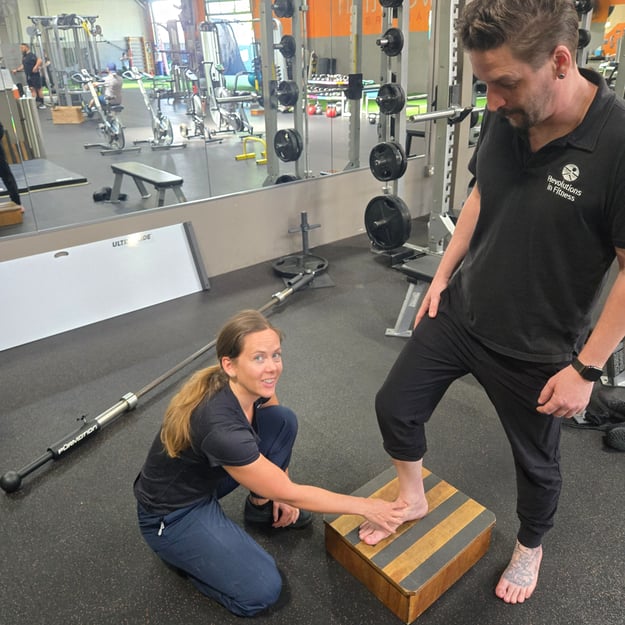
Acting quickly after an ankle sprain can mean the difference between a full recovery in weeks versus months of lingering pain and instability that keeps you from your favorite activities.
Don’t Wait to Treat That Ankle Sprain
It’s easy to fall into the “wait and see” trap with ankle sprains—but research and clinical experience show that the first 14 days are a golden window for recovery. What happens during this early period can determine whether the ankle heals quickly and fully—or develops chronic instability.
Why “Walking It Off” Can Cost Months of Recovery
We’ve all experienced it: a curb, a chaotic play, or a missed step—followed by that sickening “pop.” The usual advice is to ice it and wait. But that “wait and see” approach is often the reason many people end up with long-term ankle problems.
One of the most surprising facts in physical therapy is this: the earlier you start gentle, guided treatment, the faster you heal. Most people assume they need to walk normally before seeing a professional, but research shows that manual therapy in the first two weeks—gentle, hands-on techniques to move the joint and soft tissues—can dramatically improve recovery outcomes.
The Research on Re-Injury
One of the biggest risks of an ankle sprain isn’t the initial pain—it’s the re-injury rate. Studies (Journal of Orthopaedic & Sports Physical Therapy, Cleland et al., 2013) show that patients who receive manual therapy and supervised exercise have significantly better outcomes and less pain than those who only do home exercises.
Chronic Ankle Instability (CAI) is another concern. Without early intervention, the brain can “forget” how to properly stabilize the ankle, which leads to that frustrating “giving way” sensation months later. Gentle mobilization in the early phase helps the nervous system stay engaged, reducing the likelihood of becoming a repeat sprainer.
What Early Care Actually Looks Like
Early intervention doesn’t mean heavy squats or running on a sore foot. It’s about unloading the joint and supporting natural healing:
- Move inflammatory fluid out of the area more efficiently
- Restore the natural “gliding” motion of ankle bones that often gets restricted after a sprain
- Reduce pain signals to allow normal movement sooner
Don’t Wait for the Swelling to Stop
Catching a sprain within the first 14 days can turn a potential three-month recovery into just three weeks. Early care not only treats the current injury—it prevents future ones.
If you or your child has suffered a sprain, don’t wait for it to “feel better” on its own. A hands-on assessment now is the best way to prevent a simple sprain from becoming a lifelong “weak ankle.”