
Learn how a PT Bike Fit combines manual therapy and biomechanical analysis to address cycling pain and performance for Mountain View riders.
You have adjusted your saddle, swapped your stem, and maybe even paid for a professional fit. Yet the knee ache, tight low back, or numb hands still show up around mile 30. It is frustrating to do everything right and still hurt.
The missing piece is often not the bike. It is the body on top of it. At Revolutions in Fitness, we combine bike fitting with manual therapy and physical therapy in Mountain View so your position and your body work together.
Why Does Pain Return After a Standard Bike Fit?
A standard bike fit focuses on measurements and equipment. It aligns the saddle, handlebars, and cleats to a position that suits a typical rider. That is a useful starting point, but it does not explain why your hip hikes on one side or why your neck tightens on long climbs.
If your body lacks the mobility, strength, or control to hold a fitted position, discomfort will return. Consider the following:
- A fit can place you in a good position, but it cannot change a stiff hip or a restricted spine.
- Repeating thousands of pedal strokes with a compensation loads the same tissue again and again.
- Overuse injuries often develop gradually, so a quick equipment adjustment may not address the underlying cause.
What Makes a PT Bike Fit Different?
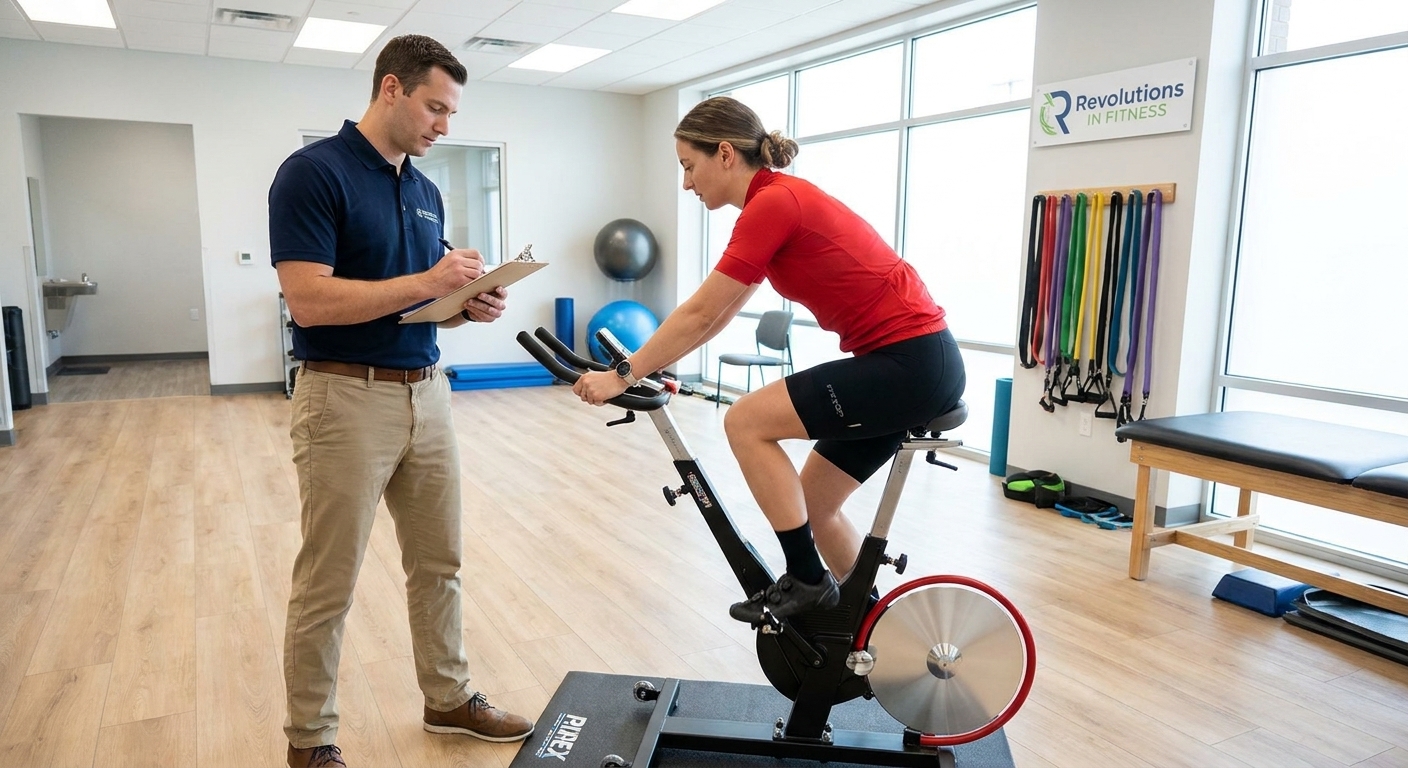
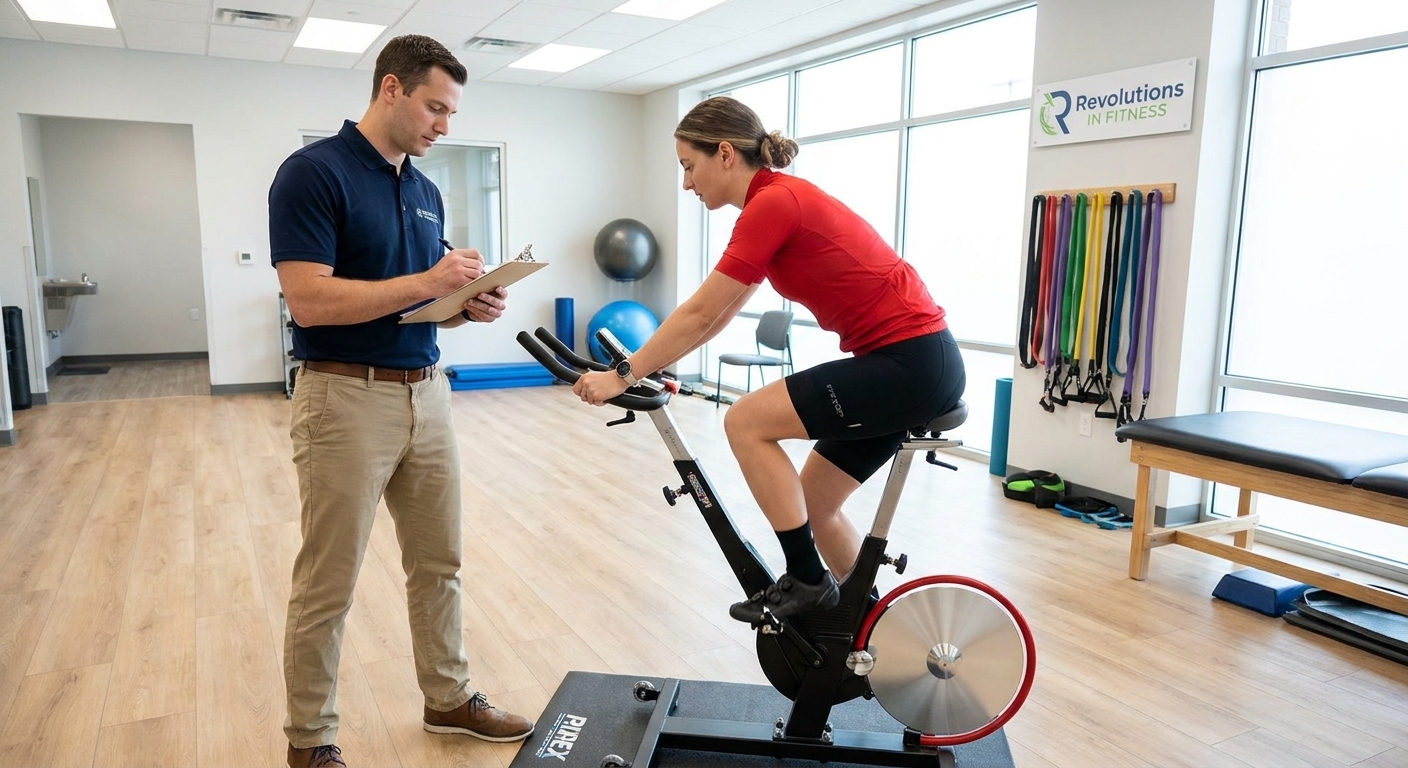
Our PT Bike Fit is a collaboration between a licensed Doctor of Physical Therapy and an expert bike fitter. One looks at the bike. The other looks at you. Together, they connect what happens on the bike with what is happening in your joints, muscles, and movement patterns.
This level of attention is trusted by competitive and professional athletes alike. You receive that same focused, individualized care whether you race or simply love your weekend loops through the Bay Area.
What Does a Biomechanical Assessment Include?
Every plan at Revolutions in Fitness begins with a comprehensive biomechanical assessment. Your session is a full 60 minutes, one on one with a licensed Doctor of Physical Therapy. There are no aides, no assistants, and no shared appointments.
Depending on your goals, your assessment may examine:
- Posture and alignment while standing, sitting, and moving
- Joint mobility through the hips, spine, and ankles
- Strength and control in the core, glutes, and legs
- Movement patterns that may influence your position on the bike
- Your riding position and how your body responds to it
This thorough evaluation creates a clear picture of what your body can and cannot do, which is essential before any meaningful changes are made.
How Does Manual Therapy Support Your Riding?
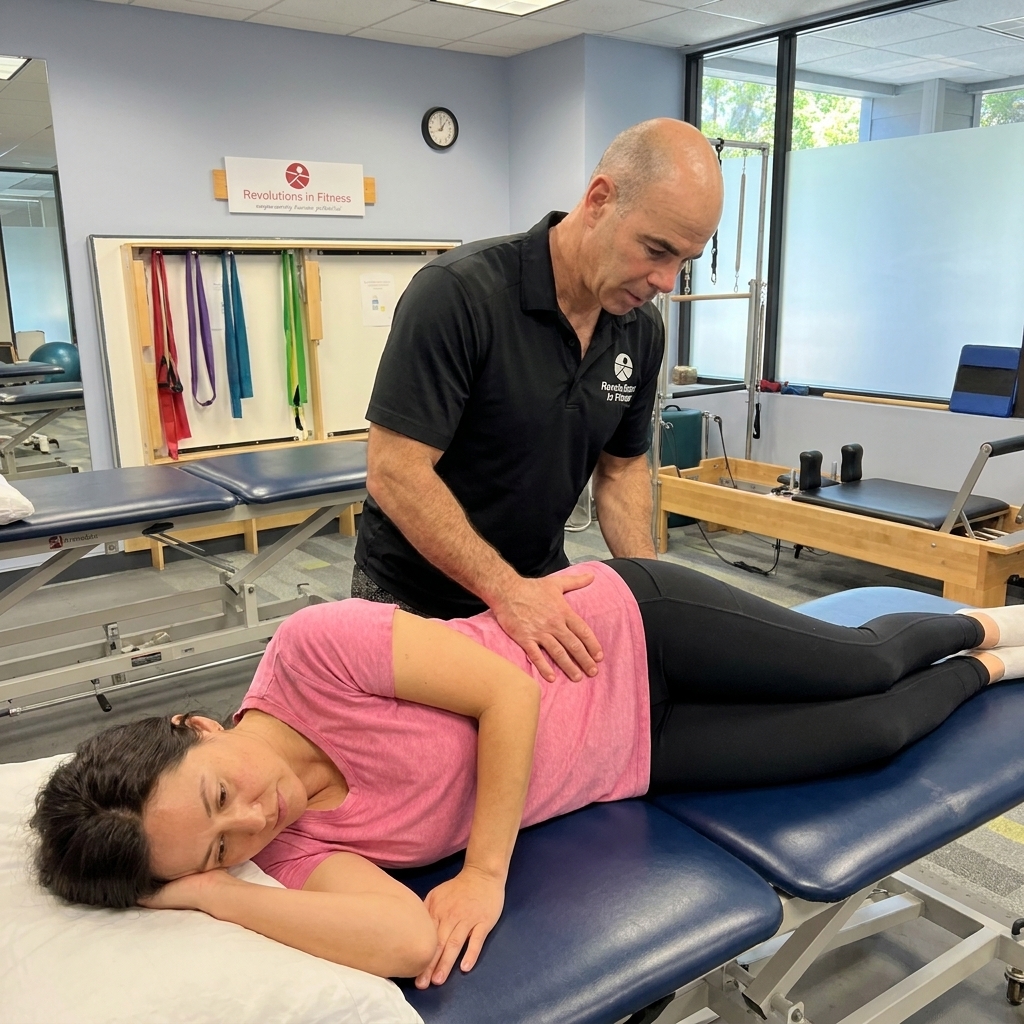
Manual therapy uses skilled, hands on techniques to improve how your joints and soft tissues move. For cyclists, that may mean restoring motion in a stiff hip or easing tension through the thoracic spine and neck, so you can hold your position with less strain.
Because your Doctor of Physical Therapy is also guiding your bike position, adjustments can be matched to what your body is actually ready to do. Your care may also include targeted mobility and flexibility work and strength building exercises that reinforce those gains over time.
Our whole body approach looks beyond the sore spot. The source of a cycling complaint is often somewhere else in the chain.
Which Cycling Problems Can This Approach Address?
Riders come to Revolutions in Fitness frustrated after generic care has not solved the problem. A cycling focused evaluation can help identify contributing factors behind issues such as:
- Low back pain and mid back pain
- Neck pain and shoulder pain
- Hip pain, including hip impingement
- Knee pain and patellofemoral pain
- IT band syndrome
- Wrist pain and hand discomfort
- Overuse injuries and tendinopathy
The goal is to find the root cause, not only quiet the symptom. That is how riders return to sport, prevent future injury, and build lasting confidence on longer rides.
Ready to Ride Better in Mountain View?
If a standard bike fit has not given you lasting comfort, it may be time for a deeper look. The team at Revolutions in Fitness will assess how you move, how you ride, and what is holding you back.
Ready for a plan built around you? Book your appointment today and take the next step toward riding stronger, more comfortably, and with more confidence.